
Adding Therapeutic and Aesthetic Neuromodulator Services to Your Dental Practice

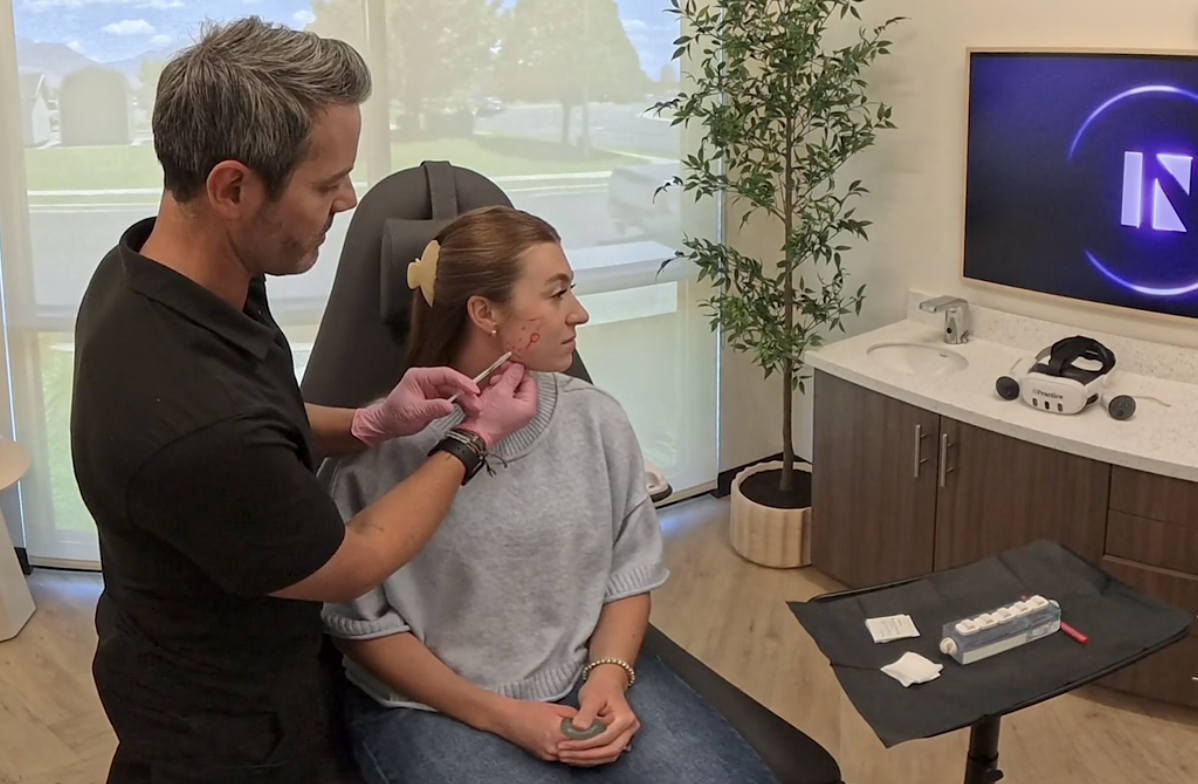
Exploring the revenue potential, training and team preparation behind practice expansion.
By InPractice360
A patient mentions that their jaw has been bothering them. Another asks about facial lines during a conversation about their smile. You may already refer these patients to another provider for evaluation or treatment. Those conversations can also prompt a question: Could neuromodulator training for dentists help you explore adding therapeutic or aesthetic services to your practice?
Your initial interest may be helping patients with jaw-related concerns, offering facial aesthetic treatments or exploring both. For a dental practice owner, each pathway means considering patient needs, appropriate training and the potential to build a new revenue stream. Referrals will remain an important part of care. The opportunity is to understand which services could appropriately fit within your own practice.
Then come the practical questions. What would you need to learn? How would appointments fit into the schedule? Who on the team would be involved? And what could these services contribute to the business?
Exploring the opportunity starts with understanding your patients, the economics and the preparation involved.
Start with the conversations happening in your practice
Before looking at revenue projections, consider what you’re hearing in the chair.
Are patients asking about clenching, grinding or jaw discomfort? Are they curious about facial aesthetic treatments? How do you currently respond, and when do you refer them elsewhere?
These conversations can help identify areas worth exploring through education. They also help distinguish an occasional question from sustained interest in a service.
Temporomandibular disorders, or TMDs, are a meaningful part of that picture. The National Institute of Dental and Craniofacial Research estimates that they affect about 5% of U.S. adults, although estimates vary by population and diagnostic methods. TMDs involve the jaw joint, surrounding muscles and related structures. “TMJ,” often used casually to describe these problems, is the name of the joint itself. NIDCR: Temporomandibular Disorders and Jaw Pain
Facial aesthetics brings a different conversation: the patient’s goals, expectations and interest in elective treatment. A practice considering both areas needs to understand each on its own terms.
A useful starting point is to record the questions patients ask over several weeks. That gives the team something concrete to discuss when evaluating further education and potential services.
Therapeutic and aesthetic applications: a shared foundation, different goals
Neuromodulator training can support exploration of both therapeutic and aesthetic services. The two pathways share a foundation in anatomy, assessment and clinical decision-making, while requiring education specific to each application. A practice may choose to pursue one area or both, depending on patient needs, professional scope and clinical preparation.
For jaw-related concerns, the starting point is understanding the source of symptoms and the available management options. That includes knowing where evidence supports a treatment and where questions remain. NIDCR notes that botulinum toxin is not FDA-approved for TMDs and that findings on its effectiveness for these conditions are mixed. Patient selection and evidence-informed treatment planning therefore belong at the center of the learning conversation. NIDCR: TMD Treatment
Upper-face aesthetic education focuses on different patient goals and treatment considerations. Understanding expectations, assessing suitability and planning treatment are part of the work alongside learning anatomy and technique.
These subjects also have a place in organized dental education. The American Dental Association offers continuing education workshops with the American Academy of Facial Esthetics covering botulinum toxin, facial aesthetics and related topics. Eligibility to provide particular services depends on the practitioner and jurisdiction. ADA Continuing Education Workshops
For a practice owner, the question is specific: Which services fit your patients, your professional scope and the direction of your practice?
What could five additional appointments a week mean for your practice?
At an average of $400 per appointment, five additional appointments each week would generate $96,000 in annual gross revenue over 48 weeks.
Here is how the numbers build using those assumptions.
| Additional appointments per week | Annual gross revenue |
| 1 appointment | $19,200 |
| 3 appointments | $57,600 |
| 5 appointments | $96,000 |
These are planning examples before expenses. They assume the stated appointment volume throughout 48 weeks and do not represent typical or guaranteed results.
The useful next step is to substitute numbers that reflect your practice. What would you charge for the particular service? How much patient interest have you seen? What appointment capacity could you make available?
Then account for product, supplies, clinician and staff time, training, insurance and other operating costs. If new appointments would replace existing treatment time, include that tradeoff.
This gives you a more meaningful picture of the opportunity: how additional services could contribute to the practice and what it would take to deliver them.
Explore the revenue calculator on the InPractice360 Dental page to work through different appointment volumes and pricing assumptions.
Include the cost of learning in the decision
Training has its own economics. Course fees, travel, lodging, time away from patient care and additional registrations can all affect the investment.
When comparing options, ask what happens after the initial instruction. How long can you access the material? Can another team member participate? What support is available when questions arise?
For a practice preparing to introduce a service, those details matter. The first course may raise questions that become clearer only when the team starts discussing scheduling, patient conversations and workflow.
Continued access gives learners a resource to return to as their understanding develops.
Explore both pathways through one membership
InPractice360’s Dental Practice Package includes TMJ/Bruxism and Upper Face 1, bringing both educational pathways into one membership. Whether your initial interest is therapeutic applications, facial aesthetics or both, you can begin with the course most relevant to your goals and explore the other as your plans develop.
The courses address anatomy, patient assessment, treatment planning, preparation, injection technique and safety considerations, with simulated activities that let learners apply the material.
Membership includes newly released InPractice courses during the active term at no additional course fee. Upper Face 2, Advanced Upper Face and the Safety Protocol Series are listed as in production. Explore the Dental Practice Package
That gives a practice room to begin with a particular educational priority and investigate additional course material over time. The team can learn more about an area before deciding how it might fit into its plans.
Learn through SEE, TRY, DO
InPractice360 uses its SEE, TRY, DO methodology to connect instruction with participation.
Learners observe an expert’s demonstration and explanation, practice with prompts and visual guidance, then complete a virtual scenario independently. Assessment considers how they apply the material within the activity, giving them feedback to guide another attempt.
Dr. Ben Tracy, MD, and Crystal Norton, MSN, FNP-BC, contribute clinical expertise to the training. Their instruction connects the steps of an activity with the observations and decisions behind them.
“InPractice360 grew from the belief that great teaching should be something you can return to,” said Steve Deverall, CEO and founding partner.
When a question surfaces after the first lesson, learners can return to the explanation with a clearer sense of what they need to understand.
Bring the team into the learning process
Introducing a service involves more than the person performing it. Patients may ask the front desk what an appointment includes. Team members need to understand how consultations are scheduled and which questions belong with the treating clinician.
The Practice Package includes five learner profiles, a configured headset, onboarding, technical support and ongoing expert programming. Included team members can develop shared understanding while maintaining individual learning progress. See What Membership Includes
That creates an opportunity to discuss implementation together: what the training covers, what patients may ask and what further preparation is needed.
Take a closer look before deciding
A new service deserves a clear business case and thoughtful clinical preparation. Start with the patient conversations that prompted your interest. Work through the numbers. Then examine the education and support available to your team.
You may discover an opportunity that fits your practice well. You may identify questions to resolve before moving forward. Either way, you’ll be making the decision with a better understanding of what’s involved.
Your next service may begin with a patient’s question. The next step is making time to explore the answer.
Explore InPractice360 Dental and request a 20-minute practice preview to see the courses, experience SEE, TRY, DO and discuss how the training could fit your practice.