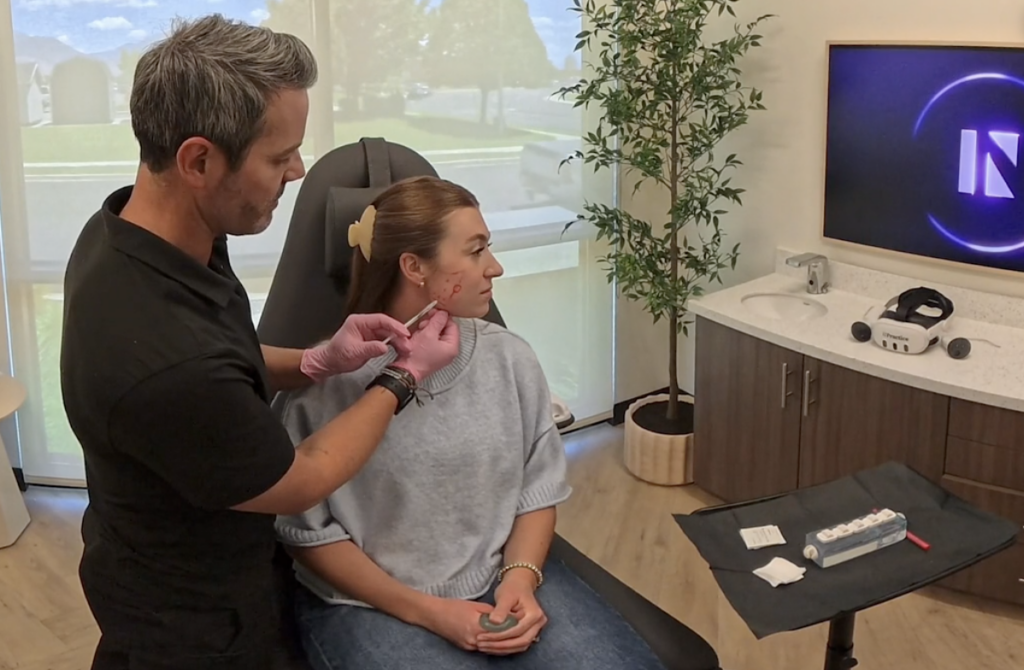
How immersive learning connects expert instruction with the opportunity to practice, receive feedback and explore new possibilities for the dental practice.
The demonstration makes sense while you’re watching it. The instructor identifies the anatomy, explains the approach and moves through the procedure. You follow each step and take notes.
Then it’s your turn, and the questions become more specific.
What exactly was the instructor looking for? Why did they adjust their approach there? Could you see that part one more time?
For a clinician learning a new technique, this is an important moment. You’re beginning to connect someone else’s explanation with your own decisions. Having access to the teaching again, with room to practice, can make that next step more manageable.
For a dental practice considering additional services, those learning opportunities also connect to a larger question: How can the team prepare thoughtfully for something new?
That is the challenge behind InPractice360: bringing expert instruction closer to the learner, even when the expert cannot be in the room.
New technology meets an old way of learning
Apprenticeship offers a useful starting point. Learning alongside an experienced practitioner means observing both the work and the thinking behind it: what they notice, when they pause and how they decide what comes next.
Steve Deverall, CEO and founding partner of InPractice360, sees an opportunity to extend that experience through immersive technology.
“What excites me is that some of the newest technology can help bring back one of the oldest ways people learned skilled work: apprenticeship,” Deverall said. “You watch someone who’s excellent at what they do. You see how they approach the patient, what they notice, and why they make certain decisions. Then you try it yourself, get guidance, and keep practicing.”
That perspective grew partly from an earlier client project. The client’s founder, an inventor and gifted teacher, no longer had the bandwidth to teach everyone in person. The team began exploring how more people could continue learning from him.
The question stayed with Deverall. How much valuable teaching depends on being in the right room at the right time? And what happens when a learner needs that instruction again?
From access to participation
Lectures, recorded demonstrations and online courses give educators different ways to share their knowledge. A lecture can introduce a complex subject. Video allows a demonstration to be paused and replayed. Online lessons can fit around a practice’s working day.
Immersive learning adds another opportunity: the learner can take part in a three-dimensional activity.
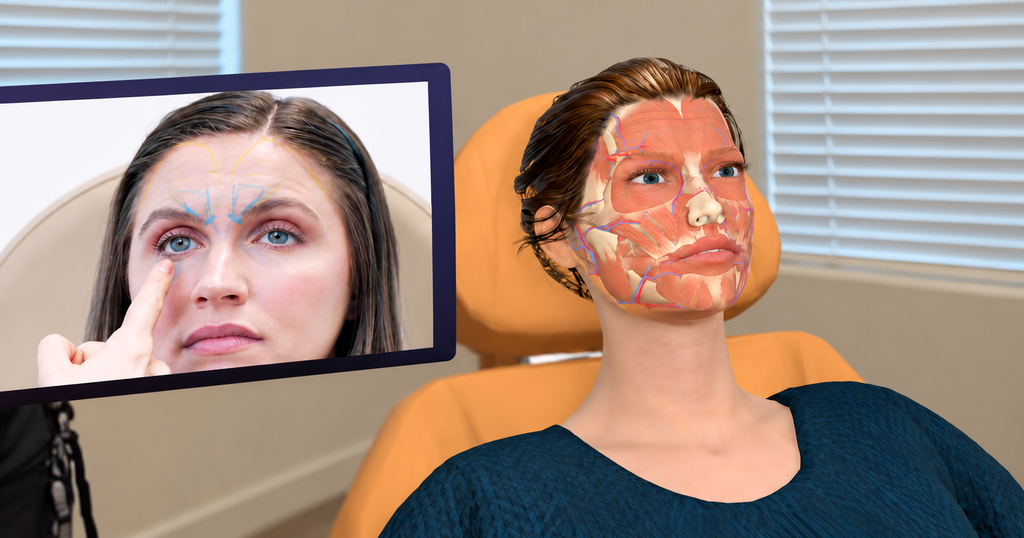
Consider the difference between watching someone identify facial anatomy and exploring those structures yourself. In the virtual environment demonstrated by InPractice360, a learner can adjust the anatomical view, mark injection sites and practice a virtual injection activity. Feedback compares aspects of their performance with expert-defined reference points.
That gives the next attempt a purpose. The learner has something specific to examine, reconsider or practice.
The value lies in how instruction, action and feedback connect. A headset provides the environment; the teaching and activity design determine what learners can do with it.
What the research supports
Research offers a reason to take active participation seriously. A 2014 analysis of 225 undergraduate STEM studies found better examination performance with active learning than with traditional lecturing. Those findings concern classroom education, rather than VR or clinical competence, but they help explain the interest in approaches that ask learners to participate.
More recent research examines immersive clinical training directly. A 2026 systematic review of 31 studies involving undergraduate medical students reported better or comparable immediate clinical skill performance in 19 of the 23 studies that assessed that comparison. However, the certainty of the evidence was low, and long-term skill retention remained uncertain.
Promising performance during or shortly after training does not establish lasting retention or better patient outcomes. These studies also do not establish results for InPractice360.
They do point toward worthwhile questions for course design. Does the learner have meaningful decisions to make? Is guidance available? Does feedback help them understand what to revisit?
How SEE, TRY, DO puts that into practice
InPractice360’s SEE, TRY, DO methodology organizes learning around a progression from observation to guided participation and independent virtual performance.
SEE: Learn from the expert
Learners observe a clinician’s demonstration and explanation. Along with technique, they encounter the reasoning behind the sequence: what the expert notices and why a decision matters.
Dr. Ben Tracy and Crystal Norton, MSN, FNP-BC, contribute their clinical expertise to the training. Preserving the connection to those educators is central to the approach.
TRY: Work through it with guidance
Prompts and visual cues support learners as they perform the virtual activity. They can connect an explanation with an action and revisit unfamiliar steps.
This stage provides room to work through questions that may not arise until someone attempts the activity themselves.
DO: Demonstrate proficiency through practice
Learners complete the virtual scenario without step-by-step guidance, then receive an assessment based on consistent, expert-defined standards. This moves assessment beyond recalling information to evaluating how they apply it: performing the steps of the activity and demonstrating technique within the virtual environment.
The feedback identifies areas that need more attention, giving learners a clear focus for their next attempt. They can revisit the instruction, practice again and compare their performance against the same standards.
Exploring new opportunities for the dental practice
For a dental practice considering additional services, education is part of a larger decision. What would these services offer patients? How would they fit into the practice? What would the team need to learn?
InPractice360’s current dental offering includes TMJ/bruxism and Upper Face 1 training, providing an entry point into therapeutic and aesthetic neurotoxin education. These areas address different patient needs and deserve separate consideration as a practice evaluates its options.
The business opportunity belongs in that conversation, too. Practice owners need to understand whether an additional service could attract sufficient patient interest, fit the schedule and contribute revenue after the costs of delivery. Training is one part of that assessment, alongside staffing, equipment, supplies and the practitioner’s qualifications and permitted scope of practice.
Repeatable instruction gives the team a resource to return to during its educational preparation. A clinician can revisit an unfamiliar step, refresh an anatomical concept or review the expert’s explanation before continuing virtual practice.
For a practice exploring expansion, that creates a practical starting point: understand the training, consider the patient needs it relates to and evaluate what further preparation would be required.
Teaching that remains within reach
“InPractice360 grew from the belief that great teaching should be something you can return to,” Deverall said.
Bringing the expert to the apprentice means keeping that teaching available as questions become more specific and learning needs change. The first demonstration introduces the experience. The next attempt gives the learner something new to notice.
For dental practices exploring therapeutic or aesthetic neurotoxin services, that ongoing access is central to what InPractice360 is building.
Explore InPractice360 and request a 20-minute practice preview to review the current courses, experience SEE, TRY, DO and discuss how the training could fit your practice’s plans.